
JY YAMANOTE LINE
YAMANOTE LINE
Tokyo’s Green Loop
.The Yamanote Line is Tokyo’s iconic train loop.
30 stations connect major areas and popular neighborhoods
It’s one of the easiest ways to explore central Tokyo
Popular Stations

Find Station by Map
About Yamanote Line
What is the Yamanote Line ?
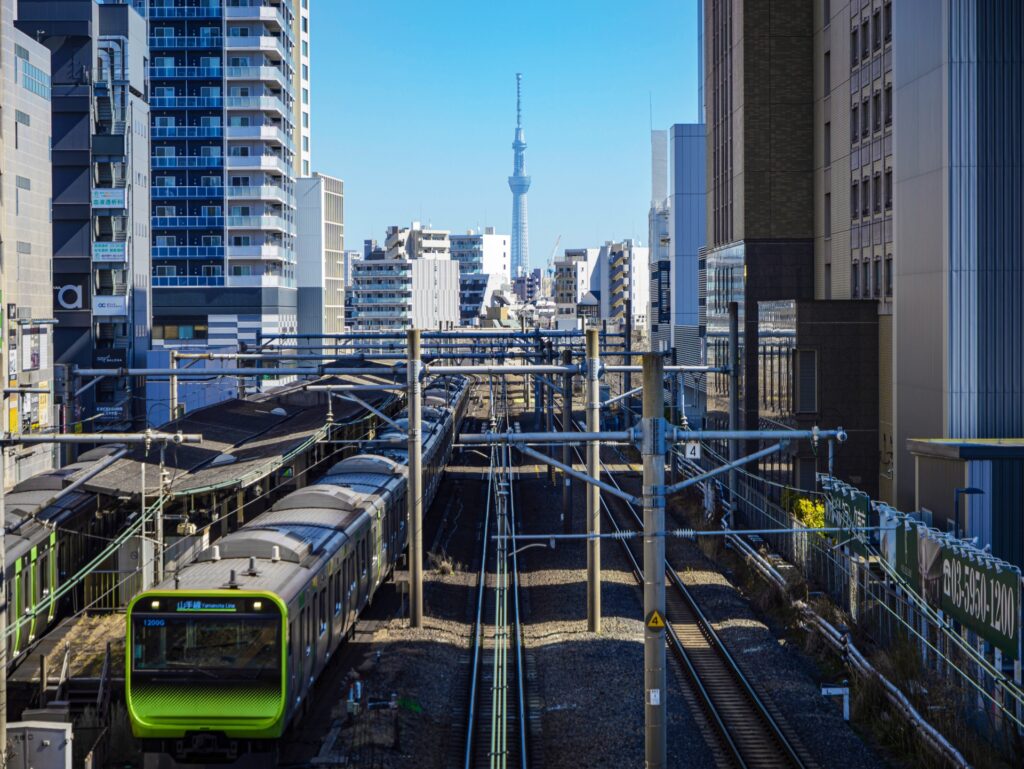
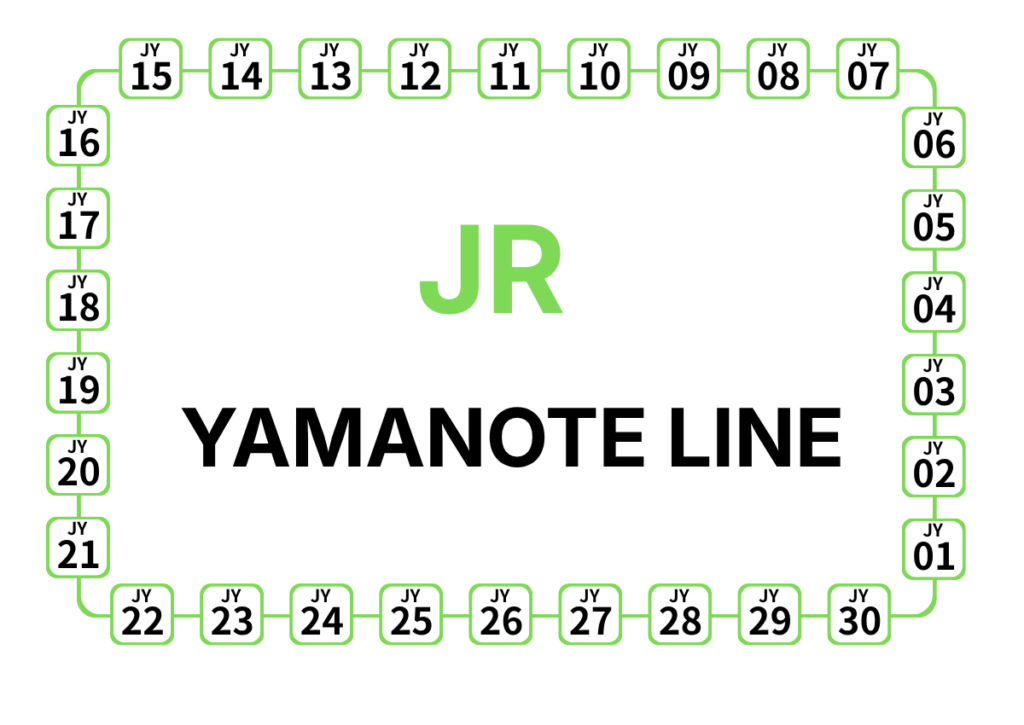
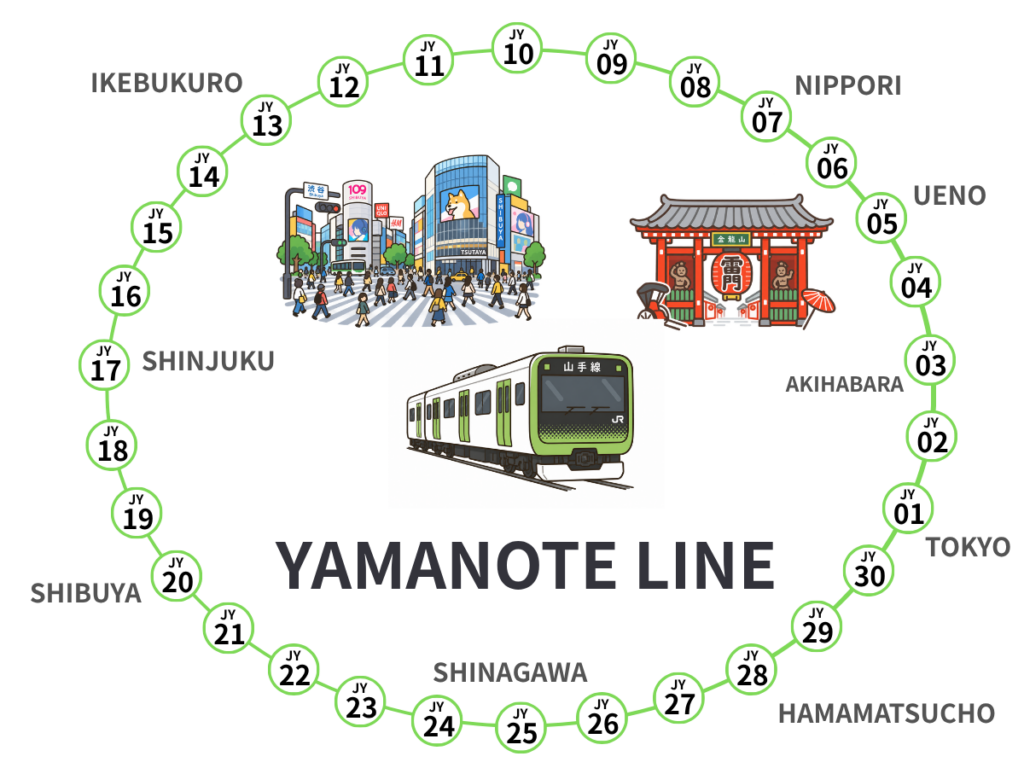
The Yamanote Line is one of Tokyo’s most important train lines. It runs in a loop around central Tokyo and connects 30 stations, including many of the city’s major areas.
The line is easy to recognize by its green color. A complete loop takes about one hour, making the Yamanote Line a simple and convenient way to get around central Tokyo.
Why is the Yamanote Line Useful for Travelers?
Many of Tokyo’s most popular areas are located along the Yamanote Line.
You can travel directly between major stations such as Tokyo, Ueno, Ikebukuro, Shinjuku, Shibuya, and Shinagawa without changing trains.
The line also connects with many subway lines, JR lines, and private railways. This makes Yamanote Line stations useful starting points for exploring other parts of Tokyo and beyond.
For first-time visitors, remembering the Yamanote Line can make getting around Tokyo much easier.
How to Ride the Yamanote Line
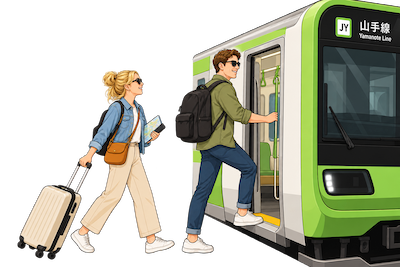
Yamanote Line stations are numbered from JY01 to JY30. Look for the letters JY and the green line color on station signs and maps.
Trains run in two directions:
- Clockwise (Sotomawari / Outer Loop)
- Counterclockwise (Uchimawari / Inner Loop)
You do not need to memorize these Japanese terms. At the station, check the signs or information screens for the direction and major stations ahead.
You can ride the Yamanote Line with an IC card such as Suica or PASMO, as well as with a regular train ticket.
How Long Does It Take to Go Around?
A complete trip around the Yamanote Line takes about one hour, although the exact time varies depending on the train and time of day.
Most neighboring stations are only about 2–3 minutes apart.
You could ride the entire loop, but for sightseeing, the Yamanote Line is more useful as a convenient way to move between different areas of Tokyo. Get off, explore a neighborhood, and then take the train to your next stop.
Major Stations & Areas
Here are some of the major stations along the Yamanote Line:
- Tokyo — Tokyo Station, Marunouchi, the Imperial Palace area, and connections to the Shinkansen.
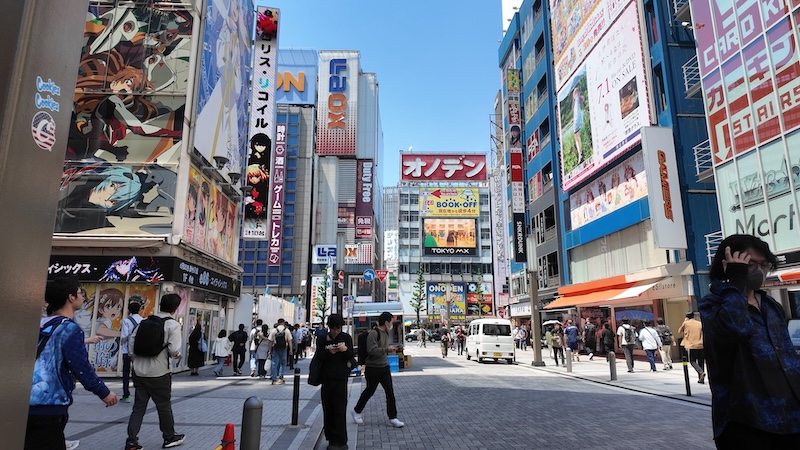
- Akihabara — Tokyo’s famous electronics and pop culture district, known for anime, manga, games, and specialty shops.
- Ueno — Ueno Park, museums, Ameyoko, and convenient access toward Narita Airport.
- Ikebukuro — A major shopping and entertainment district in northern Tokyo.
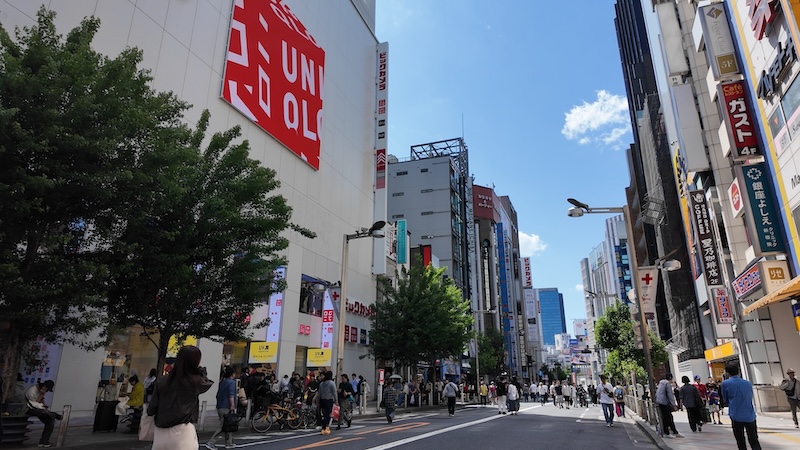
- Shinjuku — One of Tokyo’s biggest transport hubs, with shopping, restaurants, nightlife, and skyscrapers.
- Shibuya — Famous for Shibuya Crossing, shopping, fashion, restaurants, and nightlife.
- Shinagawa — A major railway hub with Shinkansen connections and convenient access to Haneda Airport.
There are also many smaller stations worth exploring. Each has its own atmosphere, from busy shopping districts to quiet residential neighborhoods.
- From the Yamanote Line to the Airports
The Yamanote Line does not go directly to either of Tokyo’s main airports, but several stations provide convenient connections.
For Haneda Airport, Hamamatsucho connects with the Tokyo Monorail, while Shinagawa connects with the Keikyu Line.
For Narita Airport, Nippori and Ueno provide access to Keisei trains, while JR airport services can also be reached from major stations such as Tokyo and Shinjuku.
If you are staying near a Yamanote Line station, getting to and from either airport is generally straightforward.
All stations
- JY01 TOKYO(東京)
- JY02 KANDA(神田)
- JY03 AKIHABARA (秋葉原)
- JY04 OKACHIMACH(御徒町)
- JY05 UENO(上野)
- JY06 UGUISUDANI(鶯谷)
- JY07 NIPPORI(日暮里)
- JY08 NISHI-NIPPORI(西日暮里)
- JY09 TABATA(田端)
- JY10 KOMAGOME(駒込)
- JY11 SUGAMO(巣鴨)
- JY12 OTSUKA(大塚)
- JY13 IKEBUKURO(池袋)
- JY14 MEJIRO(目白)
- JY15 TAKADANOBABA(高田馬場)
- JY16 SHIN-OKUBO(新大久保)
- JY17 SHINJUKU(新宿)
- JY18 YOYOGI(代々木)
- JY19 HARAJUKU(原宿)
- JY20 SHIBUYA(渋谷)
- JY21 EBISU(恵比寿)
- JY22 MEGURO(目黒)
- JY23 GOTANDA(五反田)
- JY24 OSAKI(大崎)
- JY25 SHINAGAWA(品川)
- JY26 TAKANAWA-GATEWAY(高輪ゲートウェイ)
- JY27 TAMACHI(田町)
- JY28 HAMAMATSUCHO(浜松町)
- JY29 SHIMBASHI(新橋)
- JY30 YURAKUCHO(有楽町)